Why it looks like this.
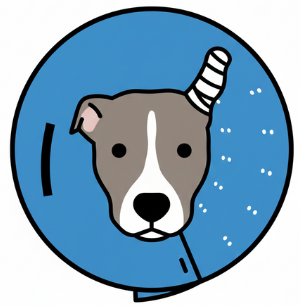
Every Budday Budderson Studio site carries one of these. It is a house tradition, not a one-off: The STAMP Protocol has its own colophon, this is bud.day's, and anything the studio builds after this will get one too.
Why this page exists
A colophon is the page at the back of a book that names the typeface, the paper, and the press — the conditions the thing was made under. Publishers print them because a book is an object someone made on purpose, and the reader is owed the terms.
A website is the same kind of object, so it gets the same page. Sites can be copied; a good one can be cloned in an afternoon. The reasoning behind a site can't be, and it is the part actually worth publishing. Everything below is either a decision with an argument attached or an admission that there wasn't one.
Drawn, and chosen
The studio decides in two ways, and it labels which is which.
Drawn means arbitrary and admitted. Budday is a pit bull. When this studio needed a publishing day and a minute, Gemini was set up as a random generator and Budday stepped on the keypad: Saturday, and 37. When the studio needed a color, the same paw drew blue. None of those were argued for. They were drawn, they were kept, and saying so is cheaper than inventing a reason afterwards.
Chosen means somebody argued for it and can defend it. The rest of this page is chosen.
Why blue and gold
Blue was drawn. #3D8EC7 is the circle behind Budday's head in the logo — the color the paw landed on. It leads the site because it is the only color here that exists for a reason other than taste, and it carries everything that acts: the rule under the header, every button and link, the room portraits, the numbers.
Gold was chosen. #C9962C sits opposite blue on the wheel, so the page has a temperature to it instead of one cool mood repeated. It is also the color of the trade this studio is actually in — cloth bindings, foil-stamped spines, the seal on a prize sticker — and bud.day publishes books. It does the fills, the frames, the museum band, and the occasional figure. It never carries small text; at this weight gold does not hold up against white, and a color that can't be read isn't a text color no matter how nice it looks.
So: two colors, two ways of deciding. One drawn, one chosen. The palette is the tagline.
Red appears exactly once on this site, on the Pitbull Welfare chip. It is kept scarce so that it still means something when it turns up. A palette where the alarm color is also the decoration has no alarm color.
What was rejected
A colophon that only lists the winners is a menu. These were live options and each was dropped for a stated reason.
Navy, nearly black. The first build of this site was dark, and it was handsome, and it was wrong — a studio whose whole promise is clarity should not make you squint. Rejected as the default, that is; as of Version 9 it is offered as a choice, under "Three finishes" below.
Red, white and blue. Considered for 2026, the United States' 250th year. Dropped: the flag tells the country's story, not the studio's, and blue was already spoken for by a dog.
Violet. The closest runner-up by instinct and the worst by argument. Violet is blue's neighbor rather than its opposite, so the page loses its counterweight — and violet is the house color of nearly every AI product on the market, which is a strange thing to wear when the point is not looking like everyone else.
Terracotta. Warm, and too near the welfare red to leave it alone. It is also the most over-used accent in machine-made design at the moment, which is disqualifying for a studio that says out loud its work is machine-drafted.
Rose. Genuinely close. Warmer than gold and more distinctive in this corner of the market; it was the deployed palette for about a day. Gold won on the argument above, and rose kept nothing.
The type
Headlines are Instrument Serif, italic, because the studio's lines are meant to be said out loud rather than scanned. Everything else is Space Grotesk. The STAMP Protocol runs on IBM Plex instead — sibling sites, deliberately different voices, so that neither one gets mistaken for the other.
Three finishes
At the head and the foot of every page there is a small control: Paper · Ink · Pencil. Paper is the site as the studio chose it — white ground, blue and gold. Ink is the same two colors on a near-black ground, for readers who run their whole machine dark; gold, which cannot carry small text on white, can carry it on ink, so it does. Pencil is the site in one gray at every weight, with every illustration going gray alongside it. Three finishes for the same pages, like a print run on three papers.
Two things the finishes are not. They are not a second palette: blue was drawn and gold was chosen, and Pencil does not change that — it withholds the draw, which is a reader's privilege, not the studio's. And they are not a retraction of the paragraph above: the dark first build was rejected as a default, which is the studio's decision, and offered as a choice, which is yours. One rule survives the switch on purpose. Red appears once on this site, on the Pitbull Welfare chip; in Pencil it would go gray like everything else, so it gets a heavy border instead, and stays the one alarm on the page.
Your choice is remembered in your own browser, as a single word — paper, ink, or pencil — and never sent anywhere. If you have never touched the control and your device is set to dark, you get Ink; otherwise you get Paper. There is no cookie, and the studio cannot see which finish you chose, or that you chose one.
The number
37 is the minute the paw drew. It is also how many rubrics are free through December 31, 2026, and it is the name of the Saturday newsletter. It recurs because it was drawn once and then kept, which is the entire idea: discipline, chosen at random.
The mascot
Every Budday on this site is one drawing — the head from the logo, lifted out of its circle — given a container per room: a book cover, a skill file, a postage stamp that prints :37, a browser window, a museum frame. The bandaged ear is the original and stays.
The header logo is normally a flat blue circle. On the first Monday of every month it becomes a second, rougher drawing instead — a hand-sketched ring, texture standing in for a brush the studio doesn't actually own — called The Popcorn Batch, because a Monday is the one day of the week with a color problem and this is the studio's one monthly refusal of it. No countdown, no announcement; it is simply there, once a month, for whoever happens to look at the header that day.
The other Bud
In May 1903 a Vermont doctor named Horatio Nelson Jackson bet fifty dollars, in a San Francisco men's club, that an automobile could be driven across the United States. He had little driving experience and no particular reason to be right. He bought a used Winton for three thousand dollars, named it the Vermont, hired a mechanic named Sewall Crocker, and left.
Outside Caldwell, Idaho, a man offered them a dog. Jackson's own account: "As I had been trying to steal one we were glad to get him so accepted the present (consideration $15.00)." The dog's name was Bud. He was a bulldog — not a pit bull, and this page is not going to pretend otherwise.
Blowing dust hurt his eyes, so Jackson bought him a small pair of goggles. Bud wore them the rest of the way and watched the road as intently as the two men did. They reached New York on the 26th of July, sixty-three days out, having spent eight thousand dollars settling a fifty-dollar bet. The goggles are in the Smithsonian.
Two things about that belong here. The first is the procedure: a wager made on a whim, honored to the far coast, at a hundred and sixty times its value. This studio's publishing day and minute were picked by a dog standing on a keyboard, and have been kept every Saturday since. Same operation, a century apart.
The second is what happened to Bud afterward. Within weeks the papers had improved him — one had him rescued from a dog fight, another had him chasing the car two miles before they let him aboard. He was mythologized faster than he was photographed, which is what later happened to Sergeant Stubby, and what happens to the whole category of dog this studio is named after. A dog becomes whatever the person writing about him needs.
So: a different Bud, a different breed, the same name and the same nonsense. The studio keeps the coincidence without claiming the ancestry. Characters carry across breeds; paperwork does not.
Draw a color yourself
This is the same operation the paw performed, scaled down to something you can do from a browser. It runs on this page only and changes nothing else on the site. Its sibling, Draw a Budday — seven traits, 112,896 possible dogs — moved to the front page as of Version 11, because a studio that opens with "AI-native, STAMP-disciplined" should let you draw one before you've scrolled past the headline.
Budday drew once and the studio kept it. You can draw as often as you like; none of them are the house color. That is the difference between drawn and chosen — the draw only counts if you agree in advance to live with it.
The arithmetic
For the curious, and for nobody's benefit but theirs: here is exactly what the button is doing.
Draw a color picks one name from a list of twenty-four — cobalt, marigold, oxblood, pistachio, and twenty more — each with a fixed hex value. Twenty-four is not a magic number; it is how many the studio could name without reaching. None of them is the house blue, which was drawn once by a paw and is not on the list. The odds of the button landing on any given color are one in twenty-four, every time, with no memory of the last draw.
But how many colors are there, really? Take the one on screen as you read this — say it came up brick, #8C3B2E. That code is three numbers in disguise: how much red, how much green, how much blue, each from 0 to 255. Multiply the choices through — 256 × 256 × 256 — and a screen can show 16,777,216 colors. Sixteen million, seven hundred and seventy-seven thousand, two hundred and sixteen. The button draws from twenty-four of them. That is 0.00014 percent of what it could have drawn from, which means the studio looked at sixteen million colors, named two dozen, and told the rest to wait outside. There is a reason. Nobody has ever said "my favorite color is #8C3B2E." People say brick. A color without a name is a number wearing a coat, and the studio does not draw numbers; it draws things you can say out loud. So: twenty-four colors, each with a name, out of sixteen million without one. If you would like your color to be considered, name it first.
One small honesty about this panel: it starts on the house blue rather than a live draw, because that is the color that actually decided things — press the button and it leaves that state on purpose. The other draw's arithmetic — seven traits, 112,896 possible Buddays, one house dog — now lives on the front page, next to the thing it describes.
All of this is for education and entertainment. It is a page on a small studio's website, not an instrument, and the only draw that ever counted was the first one.
Editions
A printed book records its printing in the colophon, so this site records its version. Newest first; earlier ones are kept rather than overwritten.
Version 20 · September 6, 2026 · The Budday Budderson Collection has been taken down for the time being — no link to it remains anywhere on the site (nav, room grid, or home page), and the page itself is no longer published. Nothing else about the studio's rooms changed.
Version 19 · September 5, 2026 · Two fixes to the home page. The five-photo teaser above the Museum link was still five placeholder boxes reading "[ Photo ]" even after the Museum itself got real plates in Version 18 — it now shows five selected shots from the same set. And Exhibition Room 4 is now Exhibition Room 37, matching the number the rest of the site already runs on rather than an arbitrary room count.
Version 18 · September 5, 2026 · The Museum's Exhibition Room 4 stopped saying "Photographs and captions are being added" and started showing them: twenty plates, each in its own frame with a placard caption in the studio's voice. Four got real cleanup before they were hung — a staircase and light switch softened out of one, a gate pole and litter cropped from another, construction debris behind a roadside statue faded to shadow, and a screen-recording overlay cropped entirely off a fourth. Everything else got a single consistency pass — color, contrast, and warmth matched across the set — so the room reads as one exhibition rather than twenty unrelated snapshots.
Version 17 · September 5, 2026 · The browser tab still had a white square long after the header logo lost its. Two different files, same bug: the tab icon and the home-screen icon are separate images from the header mark, baked with the same opaque white background, and Version 11's fix never touched them. Both are now transparent circles, matching the mark everywhere else it appears.
Version 16 · September 5, 2026 · The draw button stopped moving. Character witnesses run three to five lines, and the panel was sized to whichever one had just come up, so the two buttons rose and fell as you drew — which anyone clicking repeatedly notices immediately. All eleven are now laid in the same grid cell with only one visible at a time, so the panel always reserves the height of the longest, at any window width, and the buttons hold one position. The trait line got the same treatment, reserving its three lines whether it needs two or three. The drawn Budday is also larger now, and centered in its column rather than shoved left.
Version 15 · September 5, 2026 · A section on the studio's name — "The other Bud" — and an eleventh character witness, both salvaged from a fact-check that went badly and then usefully. Sergeant Stubby, whom half the internet files under pit bull, was not one: his biographer Ann Bausum, working from the Smithsonian archives and the Conroy family's own papers, writes that he "was not a pit bull" and that nothing in the historical record supports the suggestion. The period press had the vocabulary and chose otherwise — the American Pit Bull Terrier had been registered since 1898 and the Boston Terrier recognized since 1893, and the New York Times called him a brindle Boston bull terrier in 1921. So he appears on the front page as what he actually demonstrates: a famous dog gets relabeled by whoever needs him. Bud, cut from the same set for the same reason, is kept here instead, where he is allowed to be a bulldog and a namesake at once.
Version 14 · September 5, 2026 · Every draw on the front page now prints a character witness: one of ten documented facts about pit bulls, each carrying its source as a link. They sit beside the newsletter rather than inside the rare-draw notice, because eight draws in nine are not rare and the facts should not be rationed. The rare notice moved under both columns, where it reads as a footing rather than a lean. Two candidates were cut in fact-checking and are recorded here rather than quietly dropped: Sergeant Stubby, whom the Smithsonian describes as "of no particular breed," and Bud, the dog who crossed America by car in 1903 wearing goggles, whom the same museum catalogs as a bulldog. Both are good stories. Neither is a pit bull story, and a page arguing for accuracy cannot start by bending it.
Version 13 · September 5, 2026 · Two fixes to the front-page playground. The Draw a Budday button and the newsletter's Subscribe button now sit on a shared row, so they line up whether or not a rare draw is showing underneath — before, the panel centered two unequal columns as blocks, which drifted out of line the moment one grew taller than the other. A rare draw also no longer says the same sentence every time: ten Budday-voiced lines now rotate underneath the fixed trait-and-odds line, one drawn at random per rare result.
Version 12 · September 5, 2026 · The header logo now changes once a month: on the first Monday, it swaps to the sketch mark — The Popcorn Batch — and reverts the rest of the month. Checked entirely in the visitor's own browser, against the visitor's own clock; nothing is fetched, nothing is stored, and the studio has no way of knowing who saw it. The sketch mark itself got the same transparency fix the flat one got in Version 11.
Version 11 · September 5, 2026 · Draw a Budday moved from this page to the front page — the first thing a visitor can do here, before they have scrolled past the hero. A draw can now come up rare (two or more of shades eyes, a gold nose, a halo, and confetti, together — roughly one in nine), which surfaces a small badge and an invitation to the Saturday newsletter; no discount or code is wired to it yet, that is a later decision, kept separate on purpose. Draw a color stays here, alone, and the arithmetic section was trimmed to match. The logo also lost its white square: it was never transparency, it was a baked-in white background, invisible on Paper only because Paper is white too — on Ink it sat in the header as a plain white box. Cut to a transparent circle, matching the shape it always claimed to be.
Version 10 · September 4, 2026 · The finish control now also sits in the header, to the right of the navigation, so a reader can change it before reading instead of after. Same three words, same stored choice; the two controls move together.
Version 9 · September 4, 2026 · Three finishes: Paper, Ink, and Pencil, chosen at the foot of every page and remembered in the reader's own browser. Ink follows a device already set to dark; Pencil is always opt-in. Three voices argued it — dark mode is a reader's choice rather than a studio's default, so it does not contradict the rejection of navy; gold finally gets to carry small text; and grayscale must be framed as withholding the draw, not as a second palette. The Pitbull Welfare chip keeps a heavy border in Pencil so the page still has exactly one alarm.
Version 8 · September 4, 2026 · The two lines traded places. "Clarity creates freedom" is now the headline and "Discipline, chosen at random" is the last sentence of the paragraph. Three arguments, one verdict: a maxim opens and a paradox closes, because a paradox is a punchline and needs its setup first; the brand's oldest promise should not sit under a campaign line; and a studio in the discipline business should not lead with the word random before the paw has been explained. The footer keeps the maxim, so the page opens and closes on it with the twist in between.
Version 7 · September 4, 2026 · The front page now says what the studio is before it says how it decides. The first sentence a stranger reads is "a small publishing studio that makes things with AI and says so," followed by what it makes; the paw story moved to the second half of the paragraph. Personality was arriving before the job description, and a first-time visitor had no way to tell a publishing studio from a dog charity.
Version 6 · September 4, 2026 · "The arithmetic" grew two paragraphs: the 16,777,216 colors a screen can show versus the twenty-four the studio bothered to name, and the 2,709,504 possible states of the whole panel. Still for education and entertainment; slightly more entertainment.
Version 5 · September 4, 2026 · A section called "The arithmetic" was added under the playground, showing the working: twenty-four colors, seven draws, 112,896 Buddays, and the two small honesties about the panel. For education and entertainment.
Version 4 · September 4, 2026 · The playground draws seven traits instead of five. A nose joined the face (seven of them, from wet to gold), and the circle behind the head got a backdrop — stars, dots, bubbles, rays, confetti, stripes, or plain — so the draw has somewhere to put weather. 112,896 possible Buddays. The two draw buttons now sit on the same line.
Version 3 · September 4, 2026 · The keyboard came out of the hero illustration. Five keys and a spacebar were reading as clutter next to the paw, which is the actual subject — now it's just the trackpad, and the paw reads instantly.
Version 2 · September 4, 2026 · The homepage got a second column. The right side of "Discipline, chosen at random" used to be empty; it is now the actual photograph — Budday's paw on the keyboard, C V B N M still visible under it — redrawn in the studio's own ink-and-fur style rather than posted as a photo.
Version 1 · September 4, 2026 · Each room mark becomes the shape of the thing it names — a book cover, a skill file, a postage stamp, a browser window, a picture frame — following the Museum's frame, which had been the only one built that way. The Rubrics mark shows what a rubric is for: a page of prose on the left for the human, a machine panel on the right for the agent, one document serving both.
Version 0 · September 4, 2026 · First build in blue and gold. Five rooms. Every room mark a circle with an object parked beside it.
Version −1 · June 1 – September 4, 2026 · Before any of this there was a primitive site: a stock WordPress theme on rented shared hosting, one page, a headline that read "Clarity Creates Freedom. Understanding is a SUPERPOWER.", two book tiles, and a newsletter form that was a placeholder for a form. It did its job, which was to exist. On September 4, 2026 the domain moved to the studio's own hand-written pages, the hosting was cancelled the same evening, and the old site was taken down for good. Nothing from it was carried over except the first three words of its headline — which, as of Version 8, are the headline again.
Made by
Static HTML and one stylesheet. No build step, no framework, no content management system, no cookies, no analytics, and nothing tracking you. The one thing the site stores is the finish you picked, in your own browser, and it never leaves it. The pages are written as files and uploaded to Cloudflare Pages; what you are reading is the file.
Drafted with Claude, Anthropic's model, then edited and signed off by a person. The studio says this on the front page too, because a studio that sells AI deployment and hides its own use of it is selling something else. Anthropic has not sponsored or endorsed any of this.
Budday Budderson Studio LLC · Albuquerque, New Mexico · Drafted by AI · Edited together · Signed by a person